


How to Select the Best Pearl Jewelry: 7 Factors Experts Use to Quality Check
Home » Luxury Jewelry Guides for Women »
In this digital age, a beautiful pearl can look impressive in a photograph and still be a poor buy. The difference between an ordinary pearl and an exceptional one is rarely explained by size or colour alone. When choosing pearl earrings, a pearl necklace or ring, you need to assess the pearl as a combination of characteristics: how sharply it reflects light, how clean its surface is, how substantial its nacre thickness and quality appears, how well the pearls match, and how naturally the colour suits the specific variety.
The good news is that you do not need to be a gemologist to make an informed purchase as a consumer. A practical starting point is the Gemological Institute of America (GIA) 7 Pearl Value Factors™: size, shape, colour, lustre, surface, nacre and matching. The relative importance of each factor can change according to the pearl type and the jewellery design. Though, together they provide a useful framework for comparing pearls and assessing quality.
Lustre: The First Factor to Look For
Pearl lustre describes the quality and sharpness of light reflected from the surface. GIA Pearl Grading for lustre ranges from excellent, good, fair, or poor.
High-lustre pearls show bright, crisp reflections and can also display a strong sense of depth or inner luminosity. Orient is a related optical phenomenon of the rainbow-like iridescence seen in some pearls.
 |  |
|---|---|
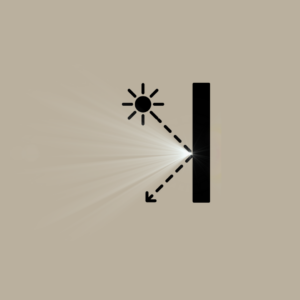
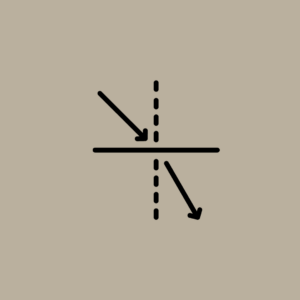
| The smoother and more even the surface of the pearl, the better it can reflect light sharply at an equal angle to which it hits the surface. This results in high brilliance. | Meanwhile, inner luminosity refers to how light refracts as it passes through the microscopic crystals within the pearl’s nacre layers. |
Therefore, a high-lustre pearl should appear luminous rather than chalky or cloudy. Reflections should look comparatively sharp, and the pearl should seem to have depth rather than simply a white coating.
How to check pearl lustre
Lustre is one of the easiest characteristics to assess with your own eyes.
Place the pearl under soft, indirect light and look at your reflection. On a fine pearl, highlights should appear crisp and the surface should have a compelling glow. Compare several pearls side by side rather than judging one in isolation.
Do not confuse colour with lustre. A dark Tahitian pearl can have exceptional lustre, while a white freshwater pearl can have a softer appearance. Hence, pearl type, nacre structure and cultivation all influence the way light behaves.
Which pearls have high lustre?
Akoya pearls are especially renowned for bright, sharp lustre, whilst lustre varies considerably among individual pearls of every shape and type.
Other premium saltwater varieties, such as Tahitian, South Sea, and Sea of Cortez pearls, are also highly celebrated for their deep, mirror-like reflectivity and distinct, vibrant overtones.

Nacre
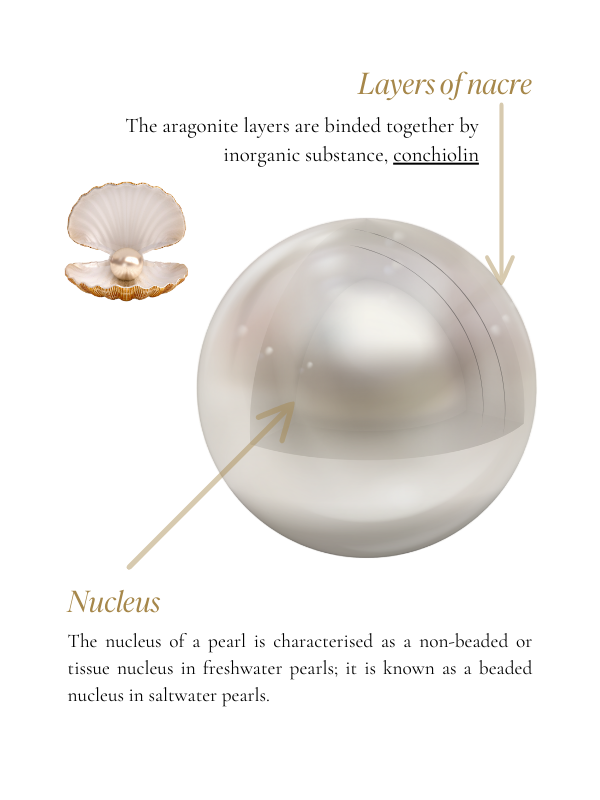
Nacre is the iridescent material deposited by the mollusc as the pearl forms. In bead-nucleated cultured pearls, nacre surrounds the nucleus.
Nacre quality matters because its structure and continuity influence both lustre and durability. The microscopic layering of aragonite crystals and organic material affects how light interacts within the pearl, interfering constructively and bouncing back to create a sharp, bright reflection. Meanwhile, interruptions or weaknesses within the nacre can affect appearance and longevity.
Nacre Thickness
Why Nacre Thickness Sometimes Matters
A thicker coating of nacre makes a pearl more durable. Robust nacre layers can handle daily wear and protect the pearl from chipping, peeling, or wearing down to the bead nucleus over time.
The Caveat: Why Thick Nacre Does Not Always Indicate Quality
However, a thicker nacre layer is not automatically synonymous with the most beautiful pearl.
Pearl type matters, and its environmental conditions can critically impact quality.
Nacre Quality
Unstructured, thick nacre
Specifically, if the pearl’s aragonite platelets are thick but deposited unevenly, the lack of structural continuity disrupts light reflection and weakens the pearl’s integrity. This results in a chalky, dull appearance and compromised durability, regardless of nacre thickness.
Structured, thin nacre – Akoya pearls
Conversely, if the platelets are thin but perfectly aligned with seamless continuity, the pearl can achieve exceptional luster and strong durability. A prime example is the Akoya pearl.
Akoya oysters (Pinctada fucata martensii) are farmed in the cool coastal waters of Japan. The cold saltwater slows down the oyster’s metabolic functions, secreting calcium carbonate and conchiolin very slowly. This unhurried pace forces the aragonite crystal tablets to form extremely thin, flat, and densely packed layers that nevertheless maintain high quality, due to its precise, continuous structure.
Therefore, when light reaches these tightly ordered, microscopic planes, it reflects cleanly off the surface rather than scattering. This thereby creates a sharp metallic or mirror-like gleam (teri).
Key takeaway: Ultimately, nacre thickness is only as valuable as the nacre quality, or the continuity of the structure holding it together.
Structured, thick nacre – South Sea Pearls
In contrast, South Sea Pearls grow inside much larger oysters (Pinctada maxima) in the warm tropical waters of Australia, Indonesia, and the Philippines.
Warm water speeds up the oyster’s metabolism, causing it to deposit nacre rapidly. This leads to a much thicker nacre coating (often 2.0 mm to 6.0 mm) over a longer cultivation cycle.
The nacre layers in a quality South Sea pearl are still fundamentally orderly and uniform on a microscopic level. However, because the crystals form faster in warm water, the individual platelets are thicker and less tightly compressed than those of an Akoya.
The thicker, slightly more diffuse stacking of these layers in South Sea pearls allows light to penetrate deeper into the pearl before bouncing back out. This soft diffusion produces a deep, satiny “glow from within” rather than the sharp, hard reflection of an Akoya.
How uneven nacre affects pearl quality
Uneven nacre, in spite of thickness, grows in pearls with wild fluctuations in water temperature, quality or other sub-optimal conditions and stressors. For example, if the mollusk encounters pollution, pearls may deposit nacre at a faster, stress-induced rate. This disrupts crystal alignment, leading to low-quality nacre with rough or uneven plates that scatter light in random directions. Scattered light makes the pearl look dull or hazy with a very gentle glow, even if the nacre is thick.
Conversely, commercial cultured pearl operations depend on clean, controlled water environments to ensure healthy mollusk growth and high quality nacre production for marketable gems with fewer defects.
For a buyer, the practical lesson is simple: do not chase a single millimetre measurement without considering the pearl variety. Ask what type of pearl you are buying, how it was graded, and whether the seller can provide meaningful information about nacre.
Surface Quality
A pearl’s surface quality refers to the condition of its outer layer. It encompasses any imperfections or flaws that may be present on the pearl’s surface.
Surface quality of Cultured Pearls and Saltwater vs Freshwater Pearls
Cultured pearls
Typically, cultured pearls have smoother surfaces than natural pearls because their cultivation periods are shorter, leaving less time for surface defects to accumulate.
Freshwater vs. saltwater pearls
However, tissue-nucleated freshwater pearls often develop more irregular shapes and blemishes than bead-nucleated saltwater pearls. This occurs because tissue grafts provide less structural symmetry than a solid bead, and the faster growth speed of freshwater mollusks allows rapid, less uniform nacre deposition.
Furthermore, freshwater lake environments contain a high concentration of floating organic matter and irregular debris; when these particles get trapped against the mollusk’s tissue, they cause localised anomalies in nacre accumulation, forming visible surface ridges and spots.
Natural pearls
Meanwhile, natural pearls of any variety tend to have the most surface flaws. Irregularly shaped irritants affect pearl surface and size in the absence of human intervention.
How to inspect pearl surface quality
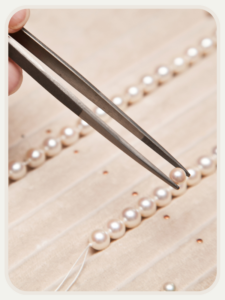
Inspect the pearl closely for pits, spots, abrasions, wrinkles or other surface characteristics. Fine pearls can still have tiny natural marks. The goal is not necessarily absolute perfection; it is to understand how visible the characteristics are and whether they affect the pearl’s overall beauty.
For earrings and rings, inspect the areas that will remain visible when worn. For a necklace, examine the entire strand because a single noticeably lower-quality pearl can interrupt an otherwise harmonious sequence.
Size
Pearl size is normally measured by diameter in millimetres.
Larger pearls are generally rarer within a given pearl variety. They can command higher prices when other quality factors are comparable, as large pearls are more rare in nature, and often require specific, optimal culturing conditions to produce a substantial and well-developed nacre.
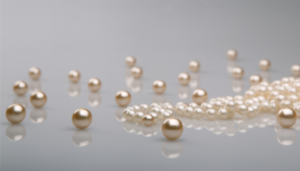
High-quality small pearl sizes
However, size alone does not make a pearl higher quality. Depending on the genetics of the specific mollusk species or pearl type, smaller pearls can still be high quality.
For example, a 7–8mm Akoya can be a magnificent fine-jewellery pearl, even though it is much smaller than the average size of a South Sea pearl. Akoya pearls tend to be small because the Pinctada fucata martensii oyster that produces them is the smallest pearl-producing oyster. However, Akoya are one of the most valuable saltwater pearls renowned for their high lustre.
Key takeaway: Always compare like with like. Ask whether the size is exceptional for that particular pearl type, and then assess lustre, surface, shape and colour alongside it.
Pearl Shape
Perfectly round pearls have traditionally attracted a premium because they are difficult to produce consistently and are highly versatile. Near-round, button, oval, drop and baroque pearls can also be valuable and beautiful.
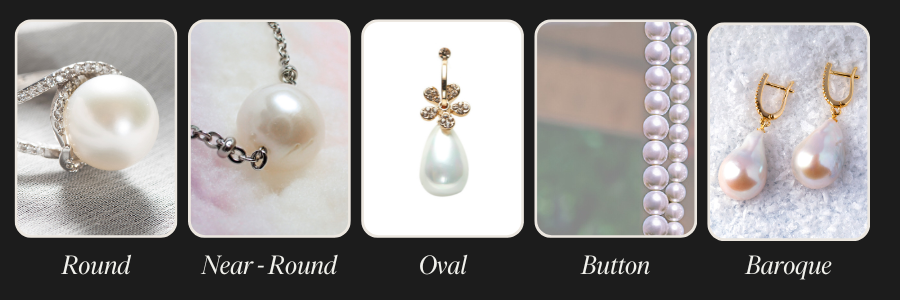
Each shape has its unique charm and character. For classic pearl studs or a traditional strand, symmetry and roundness may be priorities. For a contemporary pendant, a dramatic drop or sculptural baroque pearl may be more desirable.
Pearl shape is also influenced by the nucleation process, the shape and size of the irritant, and the mollusk’s natural tendencies during pearl formation.
For instance:
- An oval nucleus or an ovoid irritant can lead to the formation of oval pearls.
- Button pearls often result from the mollusk’s response to a flat or irregular irritant.
- Baroque pearls form when the mollusk’s response to the irritant is irregular, resulting in unique and organic shapes.
Ultimately, the choice of pearl shape comes down to personal preference and the design of the jewelry piece. People traditionally consider round pearls the most valuable due to their classic elegance and universal appeal.
Colour and Overtone
Colour should be assessed as both body colour and overtone.
The GIA notes that colour value depends on supply, demand and preferences, and unusual natural colours can also be desirable.
It’s essential to note that most natural pearls aren’t perfectly white. White pearls can display pink, silver, cream or other subtle effects. These variations are due to trace elements and pigments in the mollusk’s environment affecting the nacre layers’ colouration.
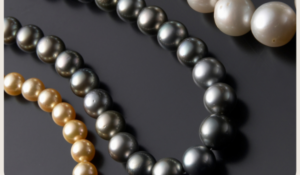
Meanwhile, black Tahitian pearls can show green, blue, rose or peacock overtones. South Sea pearls can range from white and silver to rich gold.
Key takeaway: Do not pay a premium simply because a seller calls a colour ‘rare’. Ask what makes it rare within that pearl variety and whether the colour is natural, treated or otherwise enhanced.
Matching
Pearl matching refers to the degree of uniformity and harmony in the size, shape, colour, lustre, and surface quality of the pearls used in a single piece of jewelry.
Matching is valuable when harmony across several pearls is difficult to achieve for that particular pearl type.
Exceptional matching in all aspects is rare and often reserved for high-end jewellery.
The process of matching natural and high-end cultured pearls takes time, as the jeweller or pearl specialist must search through many individual pearls to create a commercially harmonious set. Hence, the quality of cultivation and other environmental conditions impacts how each pearl may differ.
This is one reason a beautifully matched pair of pearl earrings can cost considerably more than two individually attractive pearls of similar size.
Avoid paying a premium for matching alone
Ask what is being matched, such as size, shape, colour, lustre and surface, and whether that consistency is genuinely difficult to achieve for that pearl type.
To protect yourself from overpaying for mass-harvested cultured (especially freshwater) pearls, firstly know the pearl type:
- Akoya, South Sea, and Tahitian pearls are almost always bead-nucleated. Therefore, expect them to be round and highly uniform. Do not pay an exotic “rarity premium” just because they match.
- Freshwater pearls are traditionally tissue-nucleated (with no bead inside) and grow in irregular shapes. A perfectly round, matched strand of freshwater pearls is genuinely rare and commands a higher price, though still generally less than saltwater pearls.
Key takeaway:
Real value lies in quality nacre and deep lustre, as opposed to mere roundness.
For a significant purchase, consider an independent gemological report that can identify whether the pearls are natural or cultured and, depending on the report, other characteristics such as saltwater/freshwater origin and treatments.
For example, if a seller claims a strand is “natural” or “rarely matched” but the certificate says “Cultured Akoya,” you know the roundness is a result of farming, not nature.
A Practical Pearl Buying Checklist
- Prioritise inspecting lustre rather than size for the finest visual appeal.
- Compare pearls side by side under optimal lighting.
- Inspect the physical surface firsthand rather than relying on product photography, which may mask imperfections.
- When speaking with a seller, confirm the specific pearl variety and establish whether the gems are natural or cultured.
- Aside from pearl type, it is equally important regarding higher value pearls to clarify the grading terminology the seller uses. Request official grading reports or full treatment disclosures from any jeweller or retailer.
- Note whether grading reports follow an industry standard or the retailer’s own proprietary grading certificates (as Mikimoto and Tiffany & Co. will). They may also provide independent lab reports, such as from the GIA or Hanadama certificates).
- When purchased strands or pairs, meticulously examine the uniformity of the match.
- Finally, to reduce risk as a consumer, source your pieces from specialist jewellers or heritage pearl houses where provenance and consistent quality are paramount.
The Ultimate Takeaway
Notably, the best pearl is not necessarily the largest, whitest or most expensive.
The most ideal pearl is the one whose combination of lustre, nacre, surface quality, size, shape, colour and matching makes sense for its variety, design and price. Additionally, your preferences and intended use, such as durable pearl jewelry for everyday wear or a fine occasion piece, are also relevant.
Once you understand how to assess pearl quality, the next question is just as important: which type of pearl should you actually buy?
My guide to Akoya, Hanadama, South Sea and Tahitian pearls compares the characteristics that make each variety distinctive.

Leave A Comment