


The Luxury Blouse Checklist: How to Identify High Quality Blouses
Home » Luxury Fashion Guides » Premium Women’s Workwear Guides: Elegant Business Casual & Designer Professional Attire »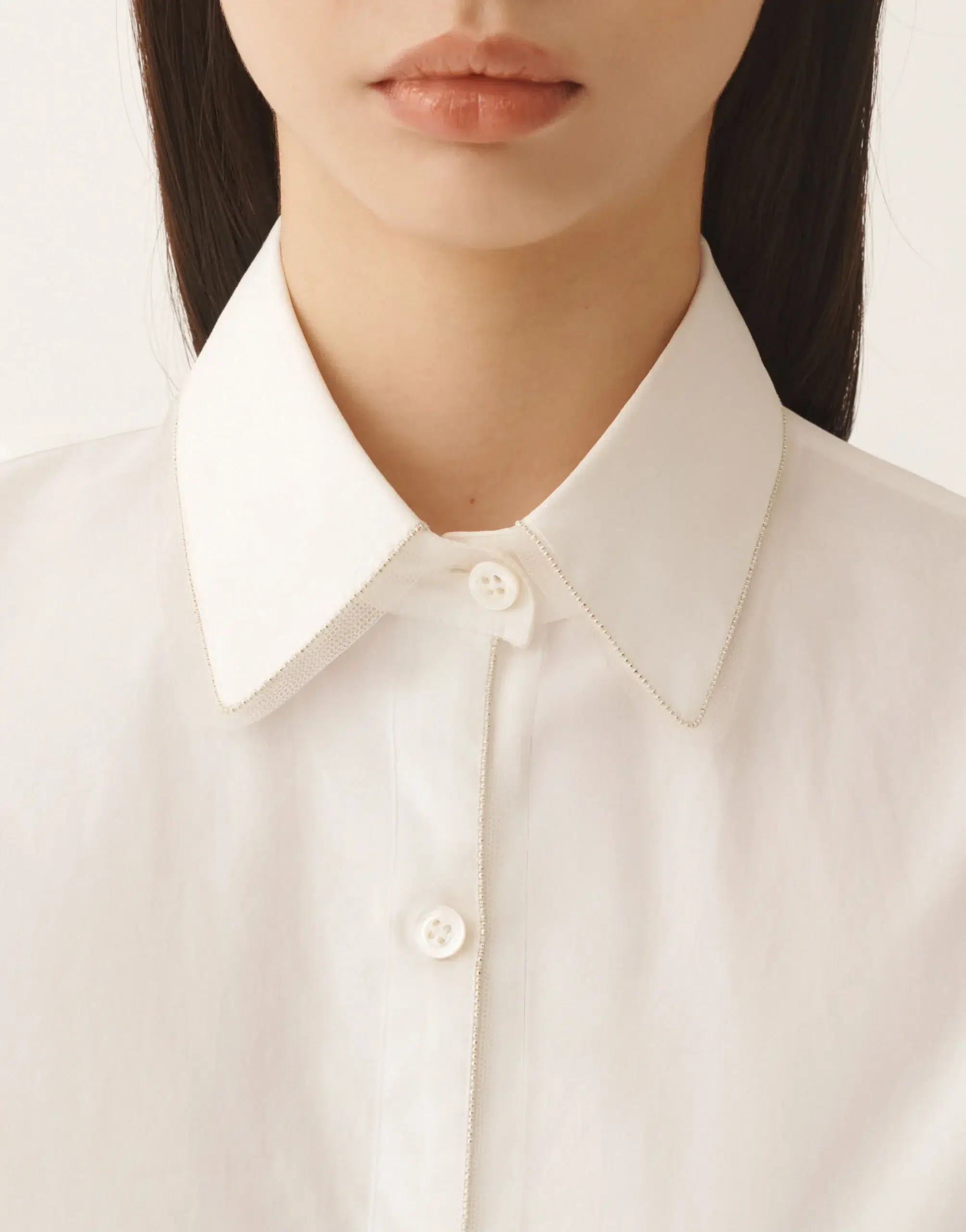
Many women assume that a blouse’s quality can be determined by its appearance, brand name, or fabric composition label. While materials such as cotton, silk, and linen certainly matter, a “100 per cent cotton” or “100 per cent silk” label alone reveals very little about how well a garment is actually made.
A high-quality blouse is determined not only by its fibre content, but also by the grade of those fibres, the weave structure used to create the fabric, the precision of its seam construction, the engineering of its fit, and the quality of its finishing details. This explains why two blouses made from the same fibre can differ dramatically in softness, durability, drape, opacity, and longevity.
For example, premium long-staple cotton produces smoother and more resilient yarns than standard short-staple cotton. Meanwhile, superior weaving techniques can create fabrics that are denser, more opaque, and less prone to wear. Likewise, carefully constructed collars, cuffs, seams, and button plackets often distinguish a truly luxurious blouse from one that merely appears expensive.
Ultimately, learning how to identify high quality blouses requires looking beyond fibre labels and evaluating the garment as a whole. This guide examines the key hallmarks of craftsmanship in high-quality women’s work blouses, from fibre quality and fabric weaves, to fit engineering, seam construction, and luxury finishing details.
The Typical Features of a High-Quality Blouse
Superior
Fibre Quality
Premium fibres, yarns
and material grades.
Fabric Weave
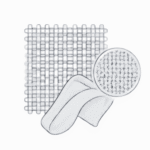
Structure
Appropriate weaves, density,
weight and opacity.
Cut and
Precision Fit
Shoulders, bust, sleeves, ease
and hem work together.
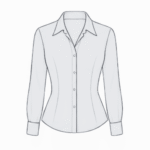
Expert Craftsmanship
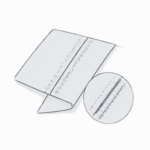
Strong seams, clean stitching and
carefully engineered construction.
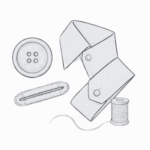
Refined Finishing Details
Buttons, buttonholes,
collars, cuffs and thread finishing.
Fibre Quality in Women’s Blouses: How to Identify Premium Cotton, Silk and Linen
Many shoppers assume that a label reading “100% cotton,” “100% silk,” or “100% linen” automatically signals quality. Though, fibre content alone reveals very little about how a blouse will perform over time. In reality, natural fibres vary enormously in grade, fibre length, density, and processing methods.
Luxury manufacturers invest in superior raw materials. Their finer fibres can be spun into smoother, stronger yarns that produce more resilient fabrics with better drape, improved durability, and a lower cost per wear.
Therefore, two blouses labelled “100 per cent cotton” or “100 per cent silk” may differ substantially in softness, durability, appearance, and longevity (and hence price points) due to the quality of the underlying raw materials. An example is the difference between short-staple Upland cotton and luxurious long-staple Giza cotton, in addition to the examples below.
Long-Staple and Extra-Long-Staple Cotton: Why Fibre Length Matters
When evaluating a cotton blouse, look beyond the simple claim of “100% cotton” and search for long-staple or extra-long staple (ELS) cotton. The most prestigious varieties include Egyptian cotton, Supima cotton, and Sea Island cotton, all of which are prized for their exceptionally long fibres.
For instance, London’s historic Jermyn Street shirtmaker, Emma Willis, frequently utilise premium long-staple cottons. Their handcrafted luxury bespoke and ready-to-wear women’s made-to-order blouses since 1999 use exclusive Swiss and West Indian Sea Island Cottons.
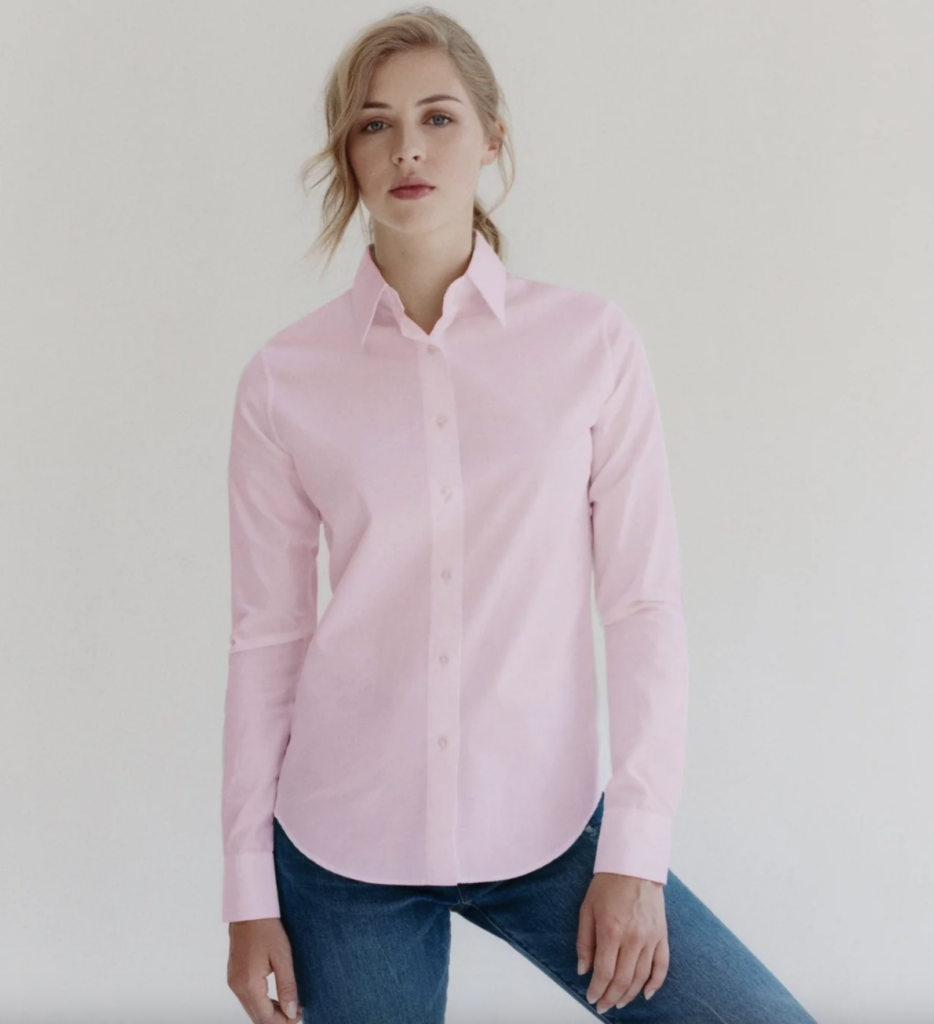
Unlike standard short-staple cotton, which is commonly grown in high-volume agricultural regions around the world, ELS cotton produces finer and more uniform yarns. Because these longer fibres can be spun into thinner yet stronger threads, manufacturers can create tighter, denser weaves with fewer exposed fibre ends on the fabric surface.
Short-staple cotton contains thousands of loose fibre ends that gradually rise to the surface through friction and repeated laundering. This results in pilling, fuzziness, and a rougher texture over time.
In contrast, ELS cotton produces a smoother hand-feel, a subtle natural lustre, enhanced durability, and superior resistance to pilling. These characteristics explain why premium cotton shirting often remains crisp and refined long after lower-grade alternatives begin to show visible wear.
How to Assess Silk Blouse Fabric
When assessing a silk blouse, look beyond the word “silk” on the composition label. One useful specification is momme, a traditional unit used to indicate the weight of silk fabric.
Momme is a measurement of fabric weight and substance, not a complete measure of silk quality.
Therefore, a higher momme generally indicates a heavier, more substantial fabric, but it does not automatically mean that the silk itself is finer or that the garment is better made. Silk type, fibre quality, weave, finishing and garment construction must also be considered.
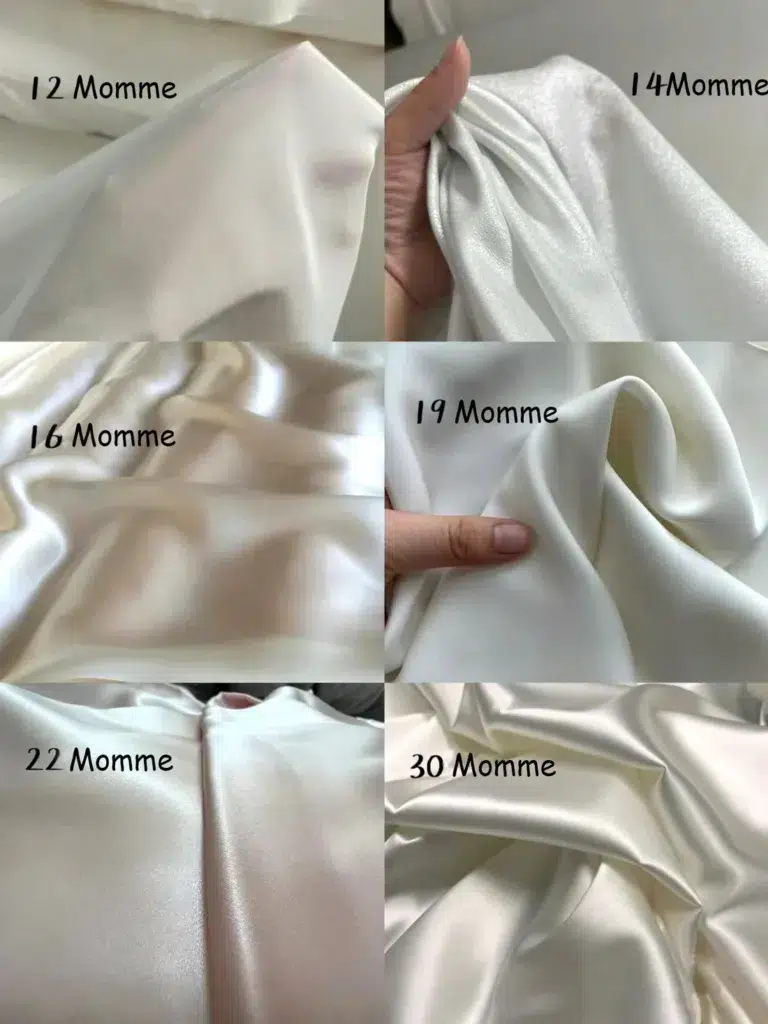
Momme Weight in Silk Work Blouses
For blouse shopping, momme weight provides a useful indication of how substantial a silk fabric will feel and perform.
As the table shows, lighter-weight silks tend to offer greater fluidity and delicacy, while higher-momme fabrics generally provide more body, coverage and substance.
For a polished professional blouse, mid- to higher-weight silk can be particularly practical, especially when you want a fabric with enough substance to drape elegantly without appearing flimsy.
Comparison Table of 12-30 Momme Weights
| 12 | Very Lightweight | Exceptionally fluid and delicate; can be more sheer, particularly in pale colours, with less body and everyday durability. |
| 14 | Lightweight | Soft, fluid and delicate; offers slightly more substance while retaining a very lightweight drape. |
| 16 | More substantial than lighter-weight silks; improved coverage and body while retaining fluid movement. | |
| 19 | Medium to Substantial | A useful balance of fluidity, coverage and substance for many polished blouse designs. |
| 22 | Substantial | Greater coverage, body and a more substantial feel; well suited to structured or polished blouse styles. |
| 30 | Heavyweight | Very substantial with pronounced body and weight; can provide excellent coverage but may have a less fluid drape. |
Ultimately, treat momme as one part of the assessment rather than a quality score. When comparing silk blouses, consider the momme weight alongside the silk type, weave, opacity, hand feel, drape, construction and finishing quality.
Premium Linen Blouses: Why Western European Flax Matters
High-end linen blouses rely heavily on geographical origin, specifically Normandy flax from Western Europe. The unique climate of this region yields longer, more flexible flax fibres than standard crops.
When spun, these longer fibres produce yarns with minimal slubbing, which refers to irregular lumps in the thread. As a result, premium Normandy linen exhibits less surface fuzzing, a smoother drape, and a crisp yet fluid silhouette that softens beautifully with age rather than degrading.
Best Fabric Weaves for
High-Quality Women’s Blouses
Selecting premium fibres is only the first step in creating a high-quality blouse. Once cotton, silk, or linen fibres have been spun into yarn, manufacturers must decide how those yarns will be woven together. This choice has a profound influence on the fabric’s appearance, texture, drape, wrinkle resistance, and suitability for different occasions.
For this reason, luxury blouse manufacturers carefully select weave structures to achieve specific performance characteristics. Some weaves prioritise crispness and structure, whilst others emphasise fluidity, softness, or wrinkle resistance.
Understanding the most common blouse weaves can help you identify fabrics that best align with your wardrobe needs and personal style preferences.
Cotton Poplin
The Classic Crisp Weave for Women’s Blouses
Notably, poplin is one of the most respected fabrics in luxury shirting. This tightly woven plain weave fabric features a smooth surface with subtle horizontal ribbing that creates a crisp, polished appearance. The dense construction provides excellent opacity, durability, and resistance to everyday wear while maintaining a lightweight feel against the skin.
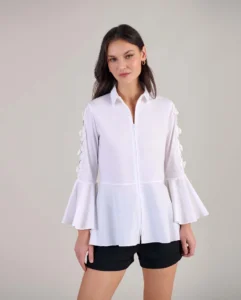
Its ability to hold a sharp press and structured silhouette makes cotton poplin particularly well suited to professional environments for a clean and tailored appearance.
Premium long-staple cotton poplin is widely regarded as one of the finest choices for classic work blouses due to its balance of comfort, breathability, and refinement.
Sateen
A Smooth, Lustrous Weave for Elegant Blouses
Secondly, sateen utilises a specialised weave structure that exposes more yarn surface on the face of the fabric. This construction produces a soft hand-feel and a gentle lustre that is more understated than satin yet noticeably more luminous than poplin.
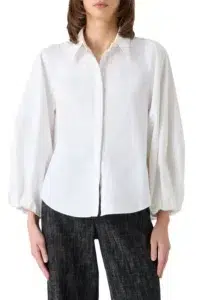
The resulting fabric drapes elegantly against the body. This makes sateen an excellent choice for women seeking an elegant blouse that feels polished yet slightly more luxurious and fluid than traditional shirting fabrics. Although, sateen can be somewhat more delicate than poplin. Alas, high-quality cotton sateen remains a popular option for sophisticated office attire and elevated everyday dressing.
Twill
A Durable Weave for Structured Work Blouses
Twill is instantly recognisable by its distinctive diagonal rib pattern. This weave structure creates a denser fabric that naturally resists wrinkling and offers excellent durability. The diagonal construction also allows the fabric to drape more fluidly than many plain weaves while maintaining substantial body and opacity.
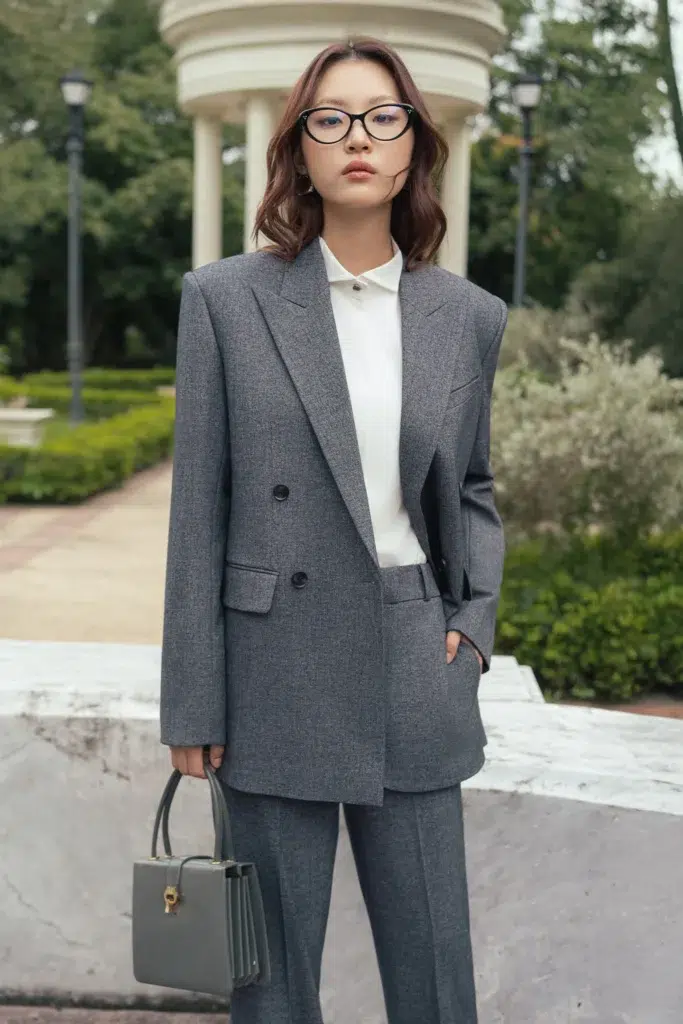
These characteristics make twill particularly appealing for professional wardrobes, frequent travel, and women who prefer fabrics that retain a polished appearance throughout the day. High-quality cotton twill often develops an exceptionally smooth finish while remaining remarkably resilient after repeated laundering.
Crêpe de Chine
Fluid Drape and Refined Texture for Blouses
Crêpe de Chine is amongst the most elegant silk fabrics used in luxury blouses.
Unlike inexpensive synthetic crepes that can feel coarse or appear excessively shiny, authentic silk Crêpe de Chine is produced using finely twisted yarns. These are woven in a manner that creates a subtly textured surface and graceful fluidity.
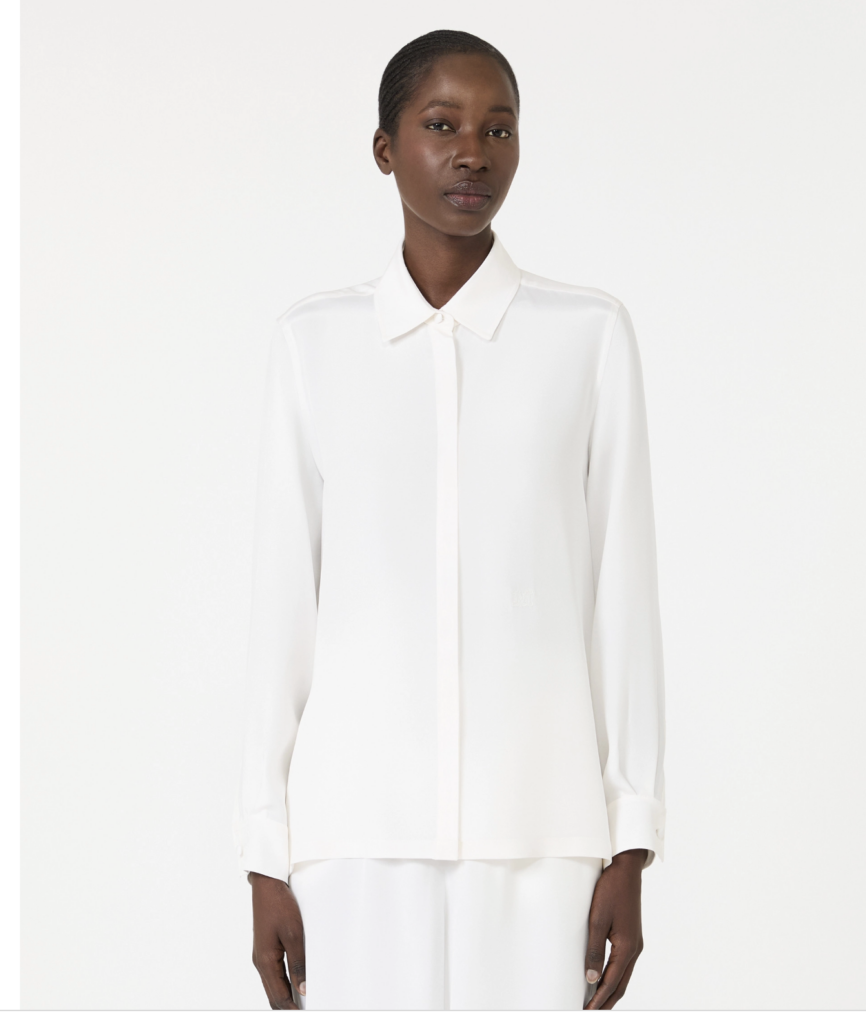
Moreover, Crêpe de Chine possesses a sophisticated matte lustre that many women find particularly flattering in professional settings.
Its characteristic texture also helps disguise minor creasing. The fabric drapes beautifully with a degree of natural stretch and moves effortlessly with the body without needing to rely heavily on synthetic fibres.
Two-Ply Yarns and Dense Fabric Construction: Signs of a High-Quality Blouse
A major indicator of luxury garment construction is yarn ply. A blouse can be made of 100 per cent cotton, but if it uses single-ply yarns, it will lack substance.
What is the difference between single-ply and two-ply fabrics?
Single-ply fabric uses individual twisted threads to weave the cloth. Two-ply fabric, however, takes two separate yarns, twists them together into a unified, stronger cord, and then weaves it into the textile. This two-ply construction eliminates the inherent weak spots of individual threads.
Consequently, the fabric gains remarkable durability, enhanced opacity, and a substantially smoother finish that resists fraying. When shopping, gently pull the fabric between your fingers. Two-ply construction feels dense and tight, whereas single-ply fast-fashion fabrics feel thin and sparse.
How to Assess Blouse Fabric Weight and Opacity
An executive wardrobe requires professional discretion. White blouses are notorious for poor fabric density and transparency issues. Therefore, they often require heavy layering that ruins the line of a tailored suit.
Perform a light test to evaluate white blouse quality before purchasing. Hold the fabric up against a bright light source and place your hand behind it. If you can clearly see the outline and skin tone of your hand through the cloth, the fabric density is insufficient.
High-quality blouses feature tightly packed yarns that provide excellent opacity while remaining breathable. The fabric should feel substantial and drape in clean, fluid lines rather than collapsing into thin, crinkled folds.
How Should a Women’s Blouse Fit?
Signs of Superior Fit
A beautiful blouse fails if the engineering of the pattern does not accommodate human movement. When trying on a work blouse, evaluate the following critical areas to ensure high-end fit engineering.
Where Should a Blouse Shoulder Seam Sit?
In classic workwear, traditional tailored shirting, and designer women’s coat brands, the shoulder seam should align closely with the edge of the shoulder bone. This creates a clean, structured silhouette that layers neatly beneath blazers and jackets.
It is worth noting that fashion-forward oversized blouses and relaxed silhouettes intentionally utilise dropped shoulders and additional ease. However, view these design choicesas stylistic preferences rather than indicators of superior fit.
How Should a Blouse Fit Across the Bust?
Ideally, evaluate a blouse while wearing the type of bra you would normally pair with it in professional settings.
This is crucial, as undergarments can significantly influence fit through the bust and armhole area. There should be no gaping, pulling, or horizontal strain lines across the button placket.
Women with fuller busts may benefit from premium blouses featuring stretch-infused fabrics, hidden interior buttons, or princess seams.
Moreover, strategically placed darts that contour the fabric naturally around the chest provide a smoother fit without sacrificing a tailored appearance.
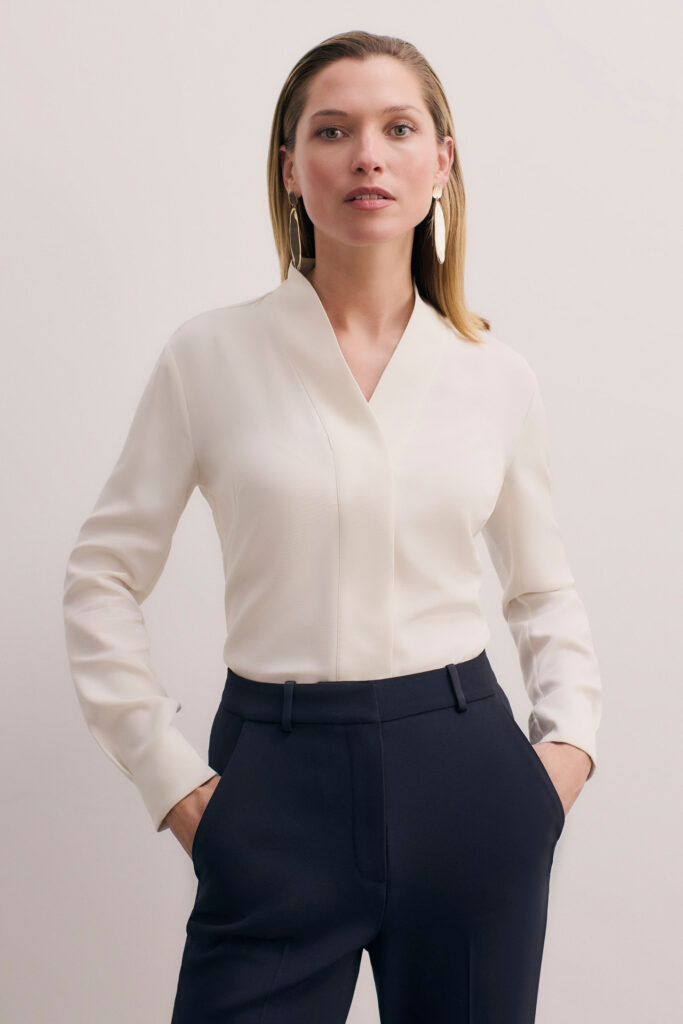
Several of the brands featured in our guide to the best quality women’s work blouses utilise stretch-infused fabrics, hidden bust-button designs, or carefully engineered dart placement to improve comfort.
For instance, London-based luxury brand The Fold London elevates this practical approach by incorporating thoughtful features like internal bra strap holders into their blouses, allowing for a secure silhouette without sacrificing convenience.
Blouse Sleeve Length: Where Should the Cuff Fall?
Rest your arms at your sides. A high-quality blouse should fit such that their cuffs should land exactly at the base of your thumb, cleanly covering the wrist bone.
How Much Ease Should a Blouse Have?
Ease through the torso is best in a good quality blouse for women when it skims the contours of a woman’s torso without clinging. You should be able to pinch approximately 1 to 2 includes of fabric at the waist for comfortable movement.
Blouse Hem Length: Where Should a Quality Blouse End?
For traditional workwear, the hem should extend sufficiently below the hips to remain securely tucked throughout a full day of movement.
Alternatively, contemporary styles such as cropped blouses, untucked silhouettes, and bodysuit blouses intentionally depart from this convention. They prioritise aesthetics or convenience rather than tuck retention. When evaluating a classic office blouse, however, generous hem length remains a hallmark of thoughtful design.
Seam Construction and Stitch Quality:
Signs of a High-Quality Blouse
The interior of a garment truly conveys the quality of its craftsmanship. Often, mass-market manufacturers use rapid overlock stitching (serging) to bind raw edges together quickly. This inexpensive method leaves exposed thread loops that can irritate the skin and fray over time.
Meanwhile, premium tailored women’s blouses, including their cuffs and armholes, utilise clean, completely enclosed finishes.
French Seams and Flat-Felled Seams
Hallmarks of High-Quality Blouse Seams
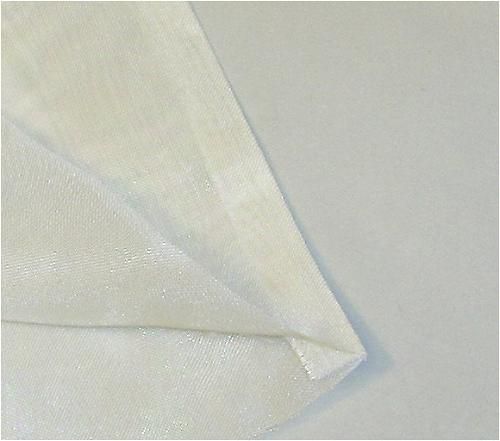
Notably, French seams completely enclose the raw fabric edge inside a double-stitched fold or tiny “tunnel” of fabric.
A French seam is widely considered the gold standard, and is most common in fine, lightweight materials, such as sheer or delicate silk blouses, organza, and chiffon. However, French seams are also found in lighter-weight and semi-sheer cotton blouses, such as cotton lawn or voile.
Stitch Density in a High-Quality Women’s Blouse: What to Look For
Inspect the stitching for precision, consistency and appropriate stitch density for the fabric and seam. There is no universal stitch-per-inch (SPI) number that automatically indicates quality: the correct density depends on the fabric, thread and construction.
Consider Single-Needle Stitching
Single-needle stitching is a notable quality detail, particularly along side seams. It creates a narrow, clean seam with a refined appearance and requires greater precision during construction.
Specialist dress-shirt makers such as Proper Cloth recommend around 18 stitches per inch or more around collars and cuffs. Although this should not be treated as a universal standard for every blouse seam.
Most importantly, stitching should be straight, evenly spaced and free from skipped stitches, loose threads, uneven tension and puckering. Excessive or insufficient stitch density can contribute to seam distortion or fabric damage, so quality lies in how well the stitching is balanced with the garment’s fabric and construction.
Look for controlled, consistent stitching rather than simply counting stitches.
How to Check Buttons, Buttonholes and Finishing Details
Small, meticulously executed components indicate that a blouse manufacturer prioritised craftsmanship over cost-cutting.
Mother-of-Pearl Buttons: Traditional Luxury Shirtmaking
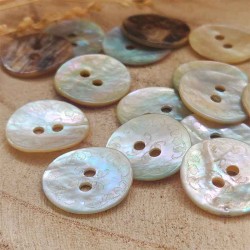
Cheap garments rely on uniform, moulded plastic buttons. Luxury blouses feature authentic mother-of-pearl buttons, harvested from oyster shells. They are cool to the touch, heavy, and display a unique, iridescent depth when caught by the light.
Beyond their aesthetic appeal, authentic mother-of-pearl buttons are highly prized for their exceptional heat resistance. This ensures the buttons will not warp or melt when subjected to the high temperatures of an iron. Their durability stems directly from the incredible structural integrity of the mother-of-pearl’s nacre composition. As a result, the buttons can resist cracking, chipping, and the intense daily wear that would easily shatter synthetic alternatives.
Reinforced Buttonholes & Button Thread:
Signs of Quality Construction
Inspect the edges of the buttonholes. They should be densely bound with thick thread, usually crafted from a durable polyester fabric “buttonhole twist”.
Or, high-quality blouses often feature high-lustre, tightly twisted silk thread, selected for its sleekness, natural elasticity, and incredible tensile strength. This thread often features a heavy purl (or bar) stitch along the inner boundaries that acts as an anchor to prevent stretching.
If you spot loose threads, frayed edges, or sloppy gaps, the buttonhole will quickly stretch out and fail to hold.
Clean Thread Finishing:
Inspecting the Inside of a Quality Blouse
Turn the blouse inside out. There should be no long, dangling thread tails at the ends of seams, cuffs, or collars. Each thread path should be cleanly back-stitched and clipped.
Spare Buttons: A Small Detail That Shows Attention to Finish
A premium garment always includes matching spare buttons sewn directly onto the interior care label.
Luxury Women’s Blouse Collars and Cuffs: Construction Details to Check
The collar and cuffs give a premium work blouse its professional authority. If these components lack structure, the blouse will quickly look limp and exhausted.
High-quality construction relies on premium interlining. This is a hidden layer of stabilising fabric sewn or fused inside the collar and cuffs.
Press the collar between your fingers; it should feel firm and resilient, yet flexible. A well-made collar features a natural collar roll that frames the neck gracefully, rather than laying flat or creasing sharply. Additionally, the cuff structure should be stiff enough to hold its shape throughout a long workday without collapsing or folding over onto itself.
Knatchbull Blouses
A Case Study in Luxury Blouse Craftsmanship
For example, luxury shirtmaker Knatchbull demonstrates how exceptional blouse quality extends beyond fibre content alone.
One of the brand’s silk tuxedo shirts combines multiple silk constructions within a single garment, pairing matte silk crepe de chine with lustrous silk satin details to create visual depth and textural contrast.
Traditional shirtmaking elements such as a structured point collar, concealed placket, deep cuffs, and Italian mother-of-pearl buttons further elevate the design.
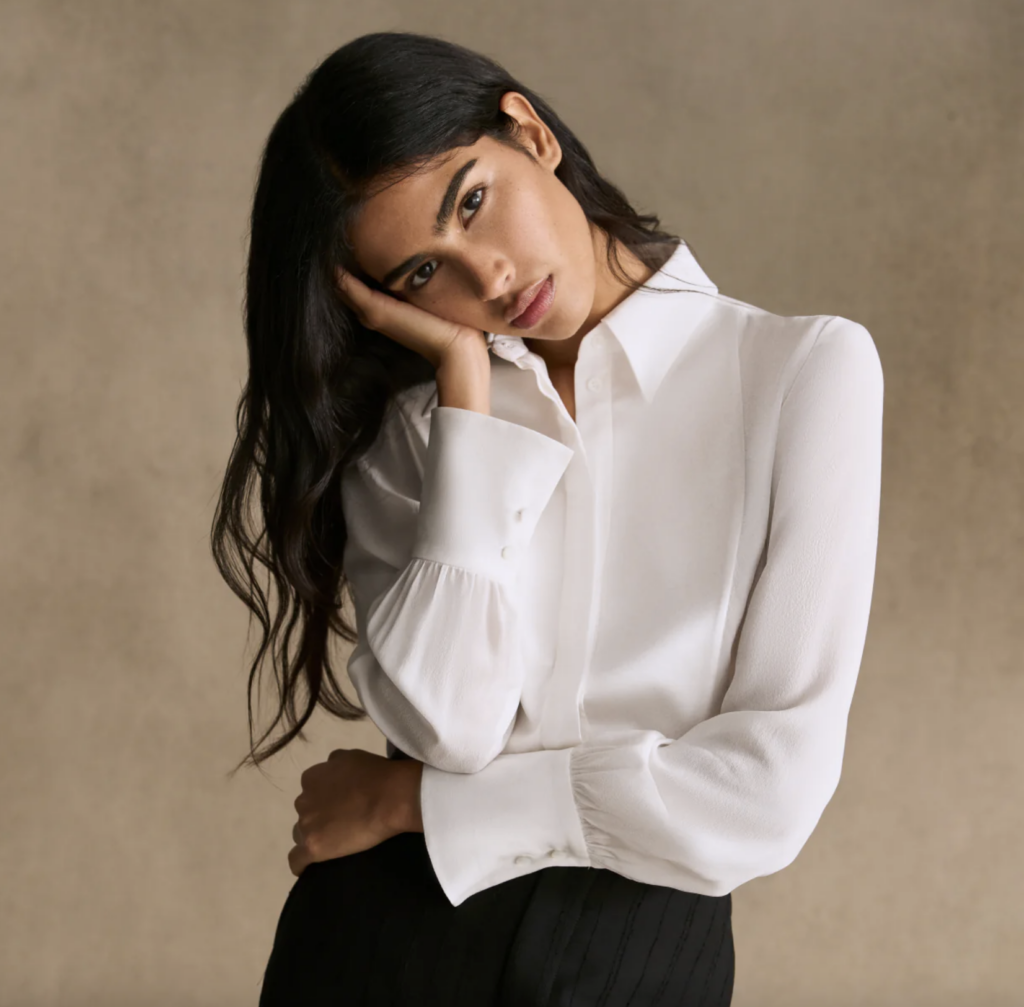
While each individual feature may appear subtle in isolation, together they reflect the thoughtful material selection, pattern engineering, and finishing techniques that distinguish genuinely luxurious blouses from mass-produced alternatives.
Fabric Recovery in High-Quality Blouses:
Why It Matters
Fabric recovery is the fabric’s ability to stretch, bend, or compress and then spring back to its original shape and size.
For office workers who spend hours sitting at a desk, fabric recovery is paramount. Poorly made blouses frequently suffer from “elbow bagging” or deep, permanent creasing across the lap and lower back that stays wrinkled all day.
Superior fabric elasticity depends on a fibre’s natural “memory.” This is created by tightly twisting and plying yarns together alongside stretchy core materials such as elastane. This dense twisting generates internal tension that acts like a spring, whilst a heat-set structure helps the material actively resist permanent stretching or distortion.
How to Test Fabric Recovery in a Blouse
To test shape retention, firmly grip a section of the blouse fabric in your fist. Squeeze it tightly for five seconds, and release it. High-quality blouse fabrics with excellent stretch recovery will spring back immediately, smoothing out within moments.
If the fabric remains deeply wrinkled, crushed, and distorted, it lacks the yarn twist density required to maintain its silhouette under professional working conditions.
Best Blouse Fabrics for Stretch, Comfort and Fabric Recovery
- 16 to 22 Momme Silk: Crepe de Chine has a high twist that naturally enhances elasticity and resists permanent stretching. Charmeuse requires higher density to hold its shape.
- Cotton (Poplin or Broadcloth): Plant fibers like cotton inherently lack elasticity and will permanently sag or wrinkle with wear. Therefore, a high-quality blouse needs to be treated with 2 to 5 per cent elastane (Spandex or Lycra) to restore the garment’s original shape and improve freedom of movement. Additionally, higher thread counts of 200 or more per inch yield a smoother, more durable finish.
- Crepe/high-twist viscose: High-twist viscose crepe is a premium semi-synthetic commonly used by major labels. It mimics the lush drape and breathability of silk but is often chosen for its matte finish and wrinkle resistance. Adding 5 per cent elastane solves viscose’s tendency to sag or warp.
High-Quality vs. Lower-Quality Blouses:
What to Look For
| Feature | High-Quality Craftsmanship | Low-Quality Mass Production |
Fibre Selection | Long-staple cotton (Supima, Egyptian), 19–22 momme silk, Normandy flax. | Short-staple cotton, low-density silk (under 16 momme), cheap polyester synthetics. |
Yarn Type | Two-ply yarns for maximum opacity and tensile strength. | Single-ply yarns resulting in sheer, weak fabrics. |
| Interior Seams | Enclosed French seams or flat-felled seams; zero raw edges. | Quick overlocked/serged seams with exposed thread loops. |
| Stitch Density | Single-needle stitching with 18 to 22 stitches per inch. | Loose, fast stitching with 10 to 12 stitches per inch. |
| Hardware | Natural mother-of-pearl buttons with heavy cross-stitching. | Uniform, moulded plastic buttons with loose thread attachment. |
| Collar & Cuffs | Structured interlining with a natural, crisp collar roll. | Limp, fused interlining that bubbles or loses shape after washing. |
| Opacity | High yarn density; completely opaque under professional lighting. | Low yarn density; translucent, requiring camisoles beneath it. |
Understanding blouse quality is only the first step. Once you know what separates exceptional garments from mediocre ones, you can make smarter purchasing decisions and build a wardrobe that lasts for years rather than seasons.
Now that you know how to analyse the technical details of garment construction, discover our curated selection of the finest options available on the market today in our comprehensive guide: 20 Best Quality Women’s Work Blouses for a Tailored Wardrobe (Ranked by Fabric and Fit).

Leave A Comment